Technology Update
We wanted to take a moment to introduce you to some of the medical technology that will be present on our ambulances. Over the past couple of months, the ESD Board has approved the purchase of the following items after a competitive evaluation and purchase process.
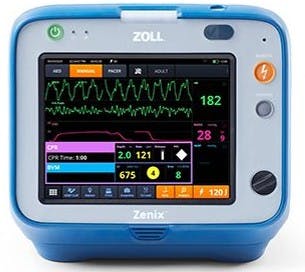
- Heart Monitors – The Zoll Zenix monitor was selected as our multi-functional heart monitor/defibrillator. The Zenix is Zoll’s latest technology and provides 12 lead monitoring, manual and automated defibrillation, pacing, end tidal CO2 monitoring and pulse oximetry. It also has a simple user interface and best-in-class CPR and ventilation feedback. Zoll offers an automated, integrated data capture system that will enable thorough quality review of cases. Each ambulance and response vehicle will have a Zenix monitor.
- Ventilators - The District purchased eighteen Z-Vent ventilators (one for each ambulance and two spares for training or short-term replacement when service is needed). Ventilators are an important adjunct for intubated as well as critical respiratory and head injured patients. Ventilators help ensure that patients with an advanced airway are managed with the correct tidal volume, respiratory rate and pressure along with the optimal inspiratory and expiratory durations. For the brain injured patients, hyperventilation causes hypocarbia (low CO2 level) which results in intracranial vasoconstriction and reduced blood flow to brain tissue. This worsens outcomes. For the CPR patient, hyperventilation causes increased chest pressure, reducing blood flow into and out of the heart. These ventilators will enable our paramedics and EMTs to prevent hyperventilation and better manage these critical patients.
- GlideScope was selected as the District Video laryngoscopy (VL) technology. VL has become the gold standard for visualizing the vocal cords when performing intubation (placing a breathing tube through the mouth into the lungs). Using traditional intubation methods, the provider uses a metal laryngoscope to access and view using the naked eye. This is a difficult, problem prone task. VL significantly improves intubation success rates and reduces complications. The VL scope has a camera and light at the distal end. This enables the provider to maintain an optimal position while visualizing the cords and other anatomical structures on a small screen, while passing the tube between the vocal cords into the lungs to breath for the patient. The device records video and still photos. These images document the procedure and are a valuable quality improvement and teaching tool. There will be one on each ambulance and supervisor vehicle.
- The Stryker PowerLoad2 system has been selected as the cot and cot-loading system. The PowerLoad2 system reduces the amount of heavy lifting performed by the ambulance crews. The loading system is mounted in the ambulance floor. The cot “docks” to the loading system. The system retracts the cot legs and self-loads the cot into the ambulance. The most common on-the-job injuries for EMTs and paramedics are related to repetitively lifting patients. The cot-loading system will reduce the potential for crew injuries lengthen the careers of our providers. In addition, the loading system offers a superior securing system, helping keep our patients and provider safe in case of a crash.
At the next board meeting, the staff will be recommending additional equipment purchase decisions, including the Saffire pump and mounting equipment for iPAD and heart monitors. We are still researching point of care ultrasound options.
Later this week, we will announce some of our software selections.